Course details:
-
14-15.02.2026 r.
-
4-5.04.2026 r.
-
Time: 9:00 - 15:00 (Saturday and Sunday)
-
Cost: 1500 zł/os
-
Online live in real time
The course link will be sent one day before the training, on 13.02.2026 r.
The cost includes:
15 hours of instructional training
Certificate and an Official Statement confirming course completion, issued in accordance with the Regulation of the Minister of National Education of 28 May 2019 on teacher training institutions (Journal of Laws of 2019, item 1045, as amended), §23 sections 2 and 3
A package of training materials
In today’s world, where social competencies play a crucial role in every area of life, an increasing number of professionals are seeking tools that enable them to effectively support children and adolescents in their interpersonal development.
One of the most effective and highly regarded tools is Social Skills Training (SST), known as the TUS Course.
If you are a psychologist, educator, therapist, teacher, social worker, or someone interested in personal and professional development in this field, the Certified TUS Course is designed specifically for you!
Completing our TUS Course provides the qualifications to conduct Social Skills Training sessions with children and adolescents in schools, kindergartens, and educational institutions.
Thanks to our MKO accreditation, each participant receives a personalized TUS Trainer Certificate in compliance with the regulations of the Ministry of National Education, along with an official certificate of completion.
Course program:
DAY 1 – BLOCK I
9:00–10:30
- Trainer introduction and getting to know the participants
- Group contract and building mutual understanding
- Introduction to Social Skills Training
- Social skills – basic concepts
- History of the development of behavior analysis and social skills
- Functional–contextual perspective
10:30–10:45 – BREAK
DAY 1 – BLOCK II
10:45–12:15
- Key elements of social skills development
- The role of Social Skills Training in prevention and therapy of social difficulties
- Main assumptions and goals of SST
- Methods used in Social Skills Training
12:15–12:30 – BREAK
DAY 1 – BLOCK III
12:30–14:00
- Classification of social skills
- Components of social skills
- How do social skills develop?
- Diagnostic methods in assessing social skills (practical examples)
- Fundamentals of interpersonal communication
14:00–14:15 – BREAK
DAY 1 – BLOCK IV
14:15–15:00
- In-depth exploration of interpersonal communication (research theories, verbal and non-verbal communication)
- Social Skills Training in education with children and adolescents/teenagers
- Strategies for implementing SST in schools
- Sample SST scenarios
DAY 2 – BLOCK I
9:00–10:30
Advanced elements:
- Advanced strategies
- Advanced interpersonal communication
- Social Skills Training for individuals on the autism spectrum
- Group learning dynamics
- The concept of emotional intelligence (EQ)
- Key researchers in the field of emotional intelligence
- Competencies that make up emotional intelligence
- Differences between IQ and EQ
- Why is it worth nurturing emotional intelligence?
10:30–10:45 – BREAK
DAY 2 – BLOCK II
10:45–12:15
- What are basic and complex emotions?
- What is self-control and how can it be developed?
- Development of empathy and emotional understanding in children
- Tests supporting the assessment of emotional intelligence
- Empathy – definition and types
- Where does empathy come from and why do we need it?
- Empathy-related skills
- What hinders the development of empathy?
- How to support the development of empathy in children and adolescents?
12:15–12:30 – BREAK
DAY 2 – BLOCK III
12:30–15:00
- What is self-esteem and what influences it?
- How to recognize high and low self-esteem
- Exercises to strengthen self-esteem
- Assertiveness (what is it?) and its relationship with self-esteem
- Summary, questions, and closing round

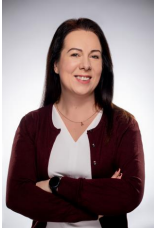
Prowadząca: Aleksandra Borowska
HRowiec, coach, trenerka biznesu i kompetencji społecznych, mediatorka, autorka książki o emocjach. W biznesie kieruję się zasadami: efektywności, zadaniowości, zaangażowania, wsparcia, budowania długotrwałych relacji z interesariuszami i tworzenia kultur organizacyjnych opartych na bezpieczeństwie psychologicznym. Ponad 10 lat doświadczenia w pracy z polskimi i zagranicznymi firmami w różnych rolach. Prowadziła szkolenia i sesje coachingowe dla: Collegium da Vinci, Poznań Biznes Partner i Fundacji Centrum Praw Kobiet, Centrum Stomatologii w Poznaniu, Urzędu Marszałkowskiego w Krakowie.